The feeling doesn't fade because life gets in the way. It fades because we stop noticing it.
Hello fellow traveller,
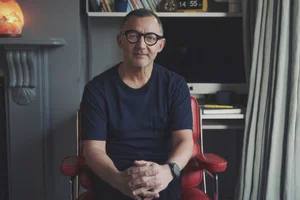
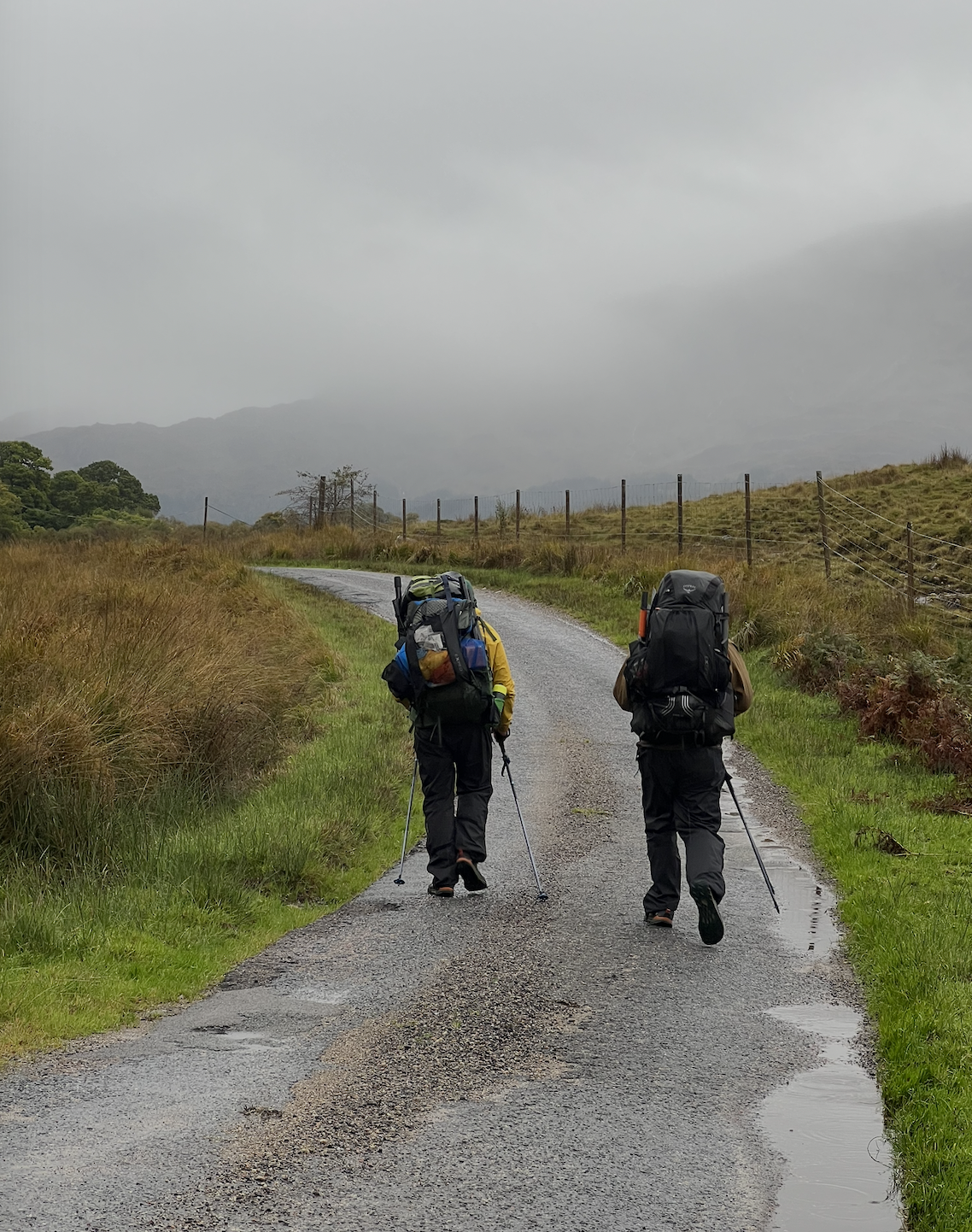
That's me on the left in the photograph. Scottish Highlands expedition, a few years ago. The rain that week was the worst in a generation — they closed the road from Fort William to Glasgow. We were out in it. We had to abandon the route we'd planned entirely and navigate blind.
We slept in ruined castles. We saw eagles. Dolphins. Seals. It was one of the most extraordinary experiences of my life.
None of it was in the plan. All of it happened because we stayed present to what the conditions were actually offering, rather than white-knuckling our way towards what we'd expected.
That's what keeping the door open looks like in practice.
Something comes up again and again in my coaching sessions, and it came up again this week.
A client said to me: I connected to something really powerful. And then life got busy, and I lost it. How do I keep it?
It's one of the most important questions there is. Because the connection isn't the hard part. Most people, given the right space and the right guide, can connect to something deep and real. The hard part is staying connected when you're back in the world, back in the noise, back in the diary.
So here's what I've learned.
You don't maintain the feeling by chasing it
The moment you turn the feeling into a destination — I need to get back to that place — you've stepped out of the present moment and into the future. Blinkered by expectation. Reaching for something just out of grasp.
The feeling isn't somewhere you go. It's something you notice. And the more you notice it, the more it shows up.
My client also said something else that struck me. He described the breathwork we'd done together as giving him a dopamine hit. And I said: be careful with that framing. Because if the only place you can access that feeling is in the breathwork session, you've made it a destination again.
The real question is: what's the halo?
The halo effect
When you do something that genuinely connects you — breathwork, meditation, a cold swim, a walk in the hills, an improv class, a conversation that goes somewhere real — it doesn't just affect that hour. It ripples.
You're more present with your family. Your monkey brain slows down. You make better decisions. You notice more. You're less reactive. You feel the absence of lack more than the presence of it.
What I’ve found is that without acknowledgement, the halo is invisible. And what's invisible fades.
So the practice isn't just doing the thing. It's noticing what the thing does. Articulating it. To yourself, out loud, or on paper. Because the moment you say "I was calmer today because I did the breathwork this morning" — that's the reward becoming conscious. And conscious rewards compound.
Recognise. Articulate. Amplify. Repeat.
Four words that came out of that session.
Recognise what you're feeling and where it's coming from. Don't let it pass unmarked.
Articulate it. Say it out loud. Write it down. Tell someone. The spoken or written word makes it real in a way that a passing thought never does.
Amplify it. Get curious. How far does it reach? How has it touched your day, your relationships, your reactions, your work? Make it bigger. Follow it.
And then Repeat — not just the practice, but the recognition itself. Go back to the note. Say it out loud again. Return to it deliberately, again and again. Small, repetitive acts of acknowledgement are what imprint something deeply enough to become part of you. Not willpower. Not discipline. Repetition of the noticing. Because the noticing takes you straight to the feeling.
And this is how the feeling stops being a peak and starts being a compass.
Let gratitude do the hard work
Phil Stutz, the psychiatrist whose work I come back to again and again, has a tool he calls The Grateful Flow. The idea is simple and profound. When you feel disconnected — when the momentum drops and the feeling fades — you don't chase it. You don't force your way back. You generate gratitude. Deliberately. For specific small things, moving quickly from one to the next, until you feel the current return.
Gratitude as an active practice, not a passive feeling. A current you can switch on.
And this is exactly what recognise, articulate, amplify, repeat is doing. You're not relying on willpower or motivation to keep the door open. You're letting gratitude do the work. Noticing what's good, naming it, returning to it. The Grateful Flow flowing through everything.
It doesn't have to be hard. It just has to be noticed.
What's one thing that's genuinely lit you up recently that you haven't fully acknowledged yet?
Best,
Hugh
You've lived many versions of yourself in this lifetime. And there are many more still to come.
If you'd like help building a practice that keeps the door open, that's exactly the kind of conversation we'd have together. Let's talk.
P.S. The acronym doesn't quite spell anything yet. I'm working on it. But the four words are right. And I think Phil Stutz would approve.