The stress doesn't have to stay. Your body already knows how to let it go.
Hello fellow traveller,
Watch a deer that's just escaped a predator.
It runs. Then it stops, trembles — a full-body shake that can last several seconds — and then, within minutes, goes back to grazing as if nothing happened.
The stress completes. The cycle closes. The nervous system resets.
We've forgotten how to do this.
Somewhere along the way we learned that composure means stillness. That processing difficulty happens in the head. That the body is just the vehicle — not the site of the work.
And so we hold the difficult meeting, deliver the hard news, navigate the crisis — and then sit back down at the desk with all that unspent activation still running quietly in the background.
And wonder why we feel simultaneously exhausted and wired.
The body is keeping score
This isn't a metaphor. It's physiology.
Peter Levine — a therapist who spent decades studying trauma and stress — made a central observation that changed how many people understand the nervous system.
Stress and trauma aren't primarily mental events. They're physiological ones.
When we experience threat — real or perceived — the body mobilises. Adrenaline. Cortisol. Muscles primed for action. The nervous system on full alert.
Animals complete this cycle instinctively through movement and shaking. The energy discharges. The system returns to rest.
Humans interrupt the cycle.
We override the physical response with cognition. We think our way through stress rather than moving through it. We manage, suppress, push through — and store the residue in the shoulders, the jaw, the chest, the gut.
Over time that accumulation has a cost.
Not dramatic. Just a low-level heaviness. A tiredness that sleep doesn't fix. A background tension that becomes so familiar you stop noticing it's there.
Until it isn't.
The body doesn't lie
My wife is a kinesiologist, homoeopath and nutritionist. She uses muscle testing with clients — gentle pressure applied to the arm while the person is exposed to different stimuli — and the body responds honestly regardless of what the mind is doing.
She found this particularly powerful with male clients. Men are often less forthcoming about what's really going on emotionally. But you can't intellectualise a muscle response. When something is affecting you — a food, a memory, a suppressed emotion — the arm weakens. The body says what the mind won't.
I've sat through it myself. It's quietly extraordinary.
The principle is the same as everything in this series. The body holds information the conscious mind either can't access or isn't ready to face. And sometimes the most direct route to what's really going on isn't through thinking.
It's through the body itself.
What actually helps
Here's what I've found — for myself and working with founders and leaders.
Sometimes the most powerful thing you can do after a difficult day isn't to process it mentally.
It's to move through it physically.
Not necessarily dramatically. Not a two-hour gym session or a ten-kilometre run. Sometimes the smallest physical interruption is enough to signal to the nervous system that the threat has passed and the cycle can close.
Here are three that work:
The deliberate shake
Stand up. Shake out your hands. Then your arms. Then your shoulders. Then your whole body — gently, loosely, without trying to look dignified. Thirty seconds. That's all.
It feels ridiculous. It works.
The trembling and shaking that animals do instinctively is something the body knows how to do — it just needs permission. You're not performing something new. You're completing something old.
The purposeless walk
Not a productive walk with a podcast. Not exercise with a target.
A walk with no destination and no agenda. Preferably somewhere with trees, water or open sky. Let the rhythm of movement do the work. Let the mind wander rather than solve.
The bilateral movement of walking — left, right, left, right — has a regulating effect on the nervous system that's well documented. It's one of the reasons difficult things often become clearer on a walk than at a desk.
Cold water
I've written about this before and I'll keep writing about it.
A cold shower. A swim in open water. An ice bath. Whatever your version is.
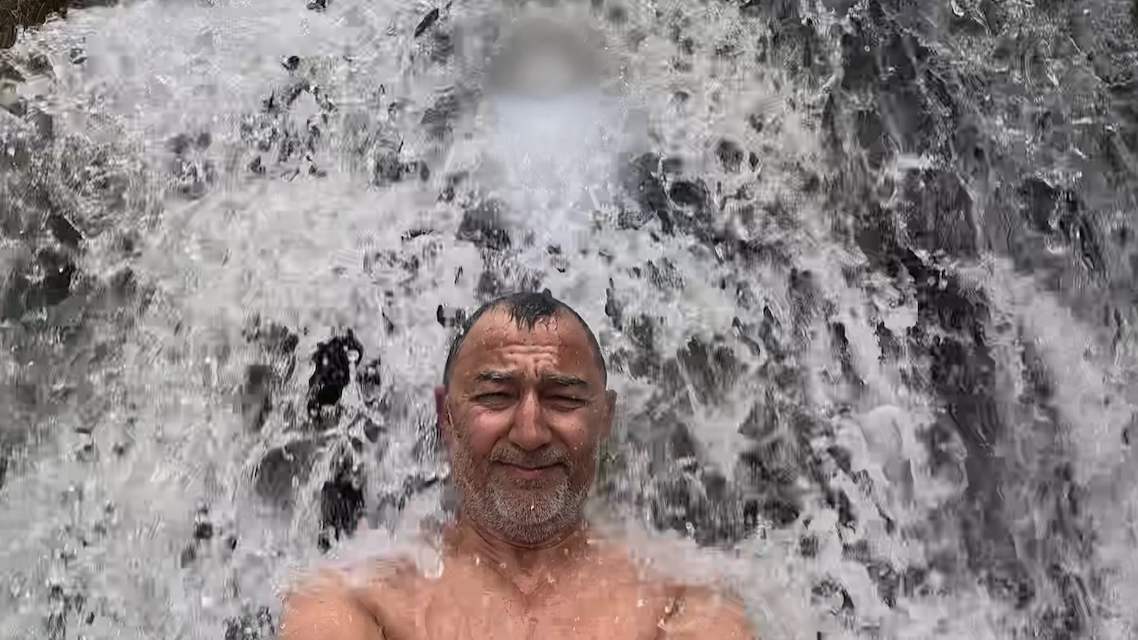
The physiological response to cold water — the gasp, the sharp intake of breath, the full-body alert — interrupts the stress pattern completely. It's impossible to be in cold water and simultaneously be ruminating about the thing that happened this morning.
And in the moments after — the warmth that returns, the endorphins, the quiet — there is a quality of presence that's hard to access any other way.
Your nervous system has just been reminded: you're alive, you're safe, and the thing you were carrying doesn't have to be carried right now.
The bigger principle
This is the third week of the Reset Series.
Week one: the breath that calms you down. Week two: the breath that wakes you up. Week three: moving through what the mind can't think its way out of.
The thread connecting all of it is the same.
You are not at the mercy of your state.
Your state is a physiological condition that can be shifted — deliberately, quickly, with the right tools. The breath is the fastest route in. Movement is the deeper cleanse. And cold water, for those willing to try it, is something else entirely.
None of this requires a retreat. None of it requires a quiet room. All of it is available right now, wherever you are.
Next week I'm moving into something different — the clothes you wear, the way you stand, and why what you do with your body before a high-stakes moment changes everything that happens in it.
Worth reading if how you show up matters to you.
This week: try the deliberate shake. Thirty seconds. No audience required. Notice what shifts.
Then hit reply and tell me what you found. I read everything.
Best, Hugh
You've lived many versions of yourself in this lifetime. And there are many more still to come.
If this resonates and you'd like to explore further, you can book a discovery call here.
P.S. The Body Keeps the Score by Bessel van der Kolk. If any of this week's newsletter resonated — if you recognised yourself in the accumulation, the tiredness that sleep doesn't fix — this book is worth your time. Not easy reading. But genuinely life-changing for anyone who's carried more than they've let themselves acknowledge.